The Best Fluffy Pancakes recipe you will fall in love with. Full of tips and tricks to help you make the best pancakes.
Ratatouille Recipe – A Classic French Vegetable Stew Packed with Flavor

There’s something so comforting about a big pan of ratatouille bubbling away. It’s rustic, colorful, and feels like summer in a dish even if you’re making it in the middle of winter. What do I love most? Ratatouille manages to be both cozy and elegant at the same time. It’s the kind of recipe that makes you feel like you should be in a French countryside kitchen with the windows open, baguette on the counter, and maybe a glass of wine nearby.
In this post, I’m sharing a ratatouille recipe that’s packed with flavor, super adaptable, and surprisingly easy to pull off. If you’ve ever been intimidated by French dishes, trust me this one’s way friendlier than it looks. By the end, you’ll be plating up vegetables so beautiful, you’ll almost hesitate to eat them (almost).
Recipe Snapshot:
| Category | Details |
| Yield | 6 servings |
| Serving Size | About 1 cup |
| Prep Time | 20 minutes |
| Cook Time | 50 minutes |
| Total Time | 1 hour 10 minutes |
| Calories per Serving | ~180 |
| Primary Cooking Method | Roasting + Simmering |
Calories are approximate and may vary depending on exact ingredients used.
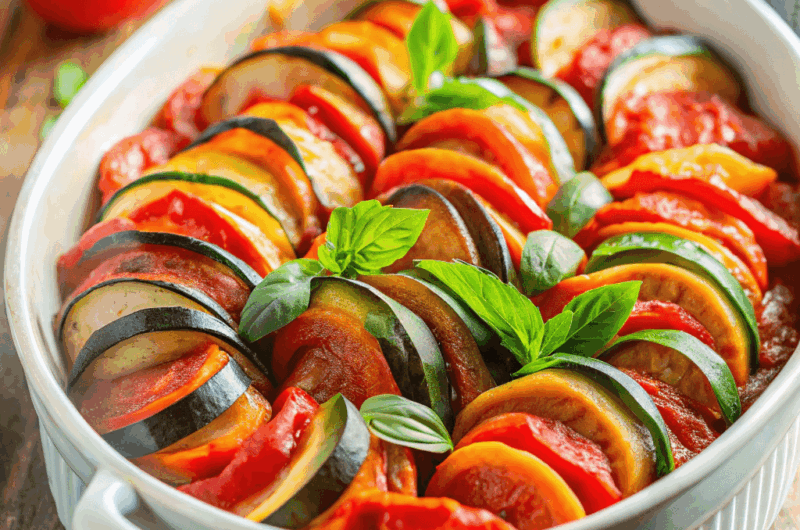
Ratatouille Recipe
Course: Main / SideCuisine: FrenchDifficulty: EasyServings
1
cupPrep time
20
minutesCooking time
50
minutesCalories
180
kcalRatatouille is a classic French Provençal dish that takes simple garden vegetables, eggplant, zucchini, peppers, and tomatoes and turns them into something magical. The beauty of this recipe is its layers of flavor: sweet roasted veggies, herby tomato sauce, and a soft, tender finish that’s perfect on its own or alongside crusty bread.
Ingredients
- For the Base Sauce
2 tablespoons olive oil
1 medium onion, diced
4 cloves garlic, minced
1 red bell pepper, diced
1 yellow bell pepper, diced
1 can (15 oz) crushed tomatoes
2 tablespoons tomato paste
1 teaspoon dried thyme
1 teaspoon dried oregano
Salt and pepper, to taste
- For the Vegetables
1 medium eggplant, thinly sliced
2 medium zucchini, thinly sliced
2 medium yellow squash, thinly sliced
3 medium Roma tomatoes, thinly sliced
2 tablespoons olive oil
Fresh thyme or basil leaves, for garnish
Directions
- Make the Sauce
Heat olive oil in a large skillet over medium heat. Add onion and garlic, sauté until fragrant (about 5 minutes). Toss in the diced peppers and cook for another 5 minutes until softened. Stir in crushed tomatoes, tomato paste, thyme, oregano, salt, and pepper. Simmer for 10 minutes, then spread the sauce evenly over the bottom of a 9×13-inch baking dish. - Prep the Veggies
While the sauce simmers, thinly slice the eggplant, zucchini, squash, and tomatoes into even rounds. Consistent thickness helps everything cook evenly. - Arrange the Layers
In the baking dish, layer the sliced veggies on top of the sauce in an overlapping spiral pattern. Alternate the colors to make it look extra pretty. Brush lightly with olive oil and season with salt and pepper. - Bake It Up
Cover the dish loosely with foil and bake at 375°F (190°C) for 40 minutes. Remove foil and bake for another 10 minutes, until veggies are tender and lightly caramelized on top. - Garnish and Serve
Sprinkle with fresh thyme or basil before serving. Serve warm with crusty bread, over rice, or even alongside roasted chicken.
Extra Tips
- Slice Evenly: Use a mandoline slicer for perfectly even vegetable rounds. It makes the dish look restaurant-worthy.
- Salt the Eggplant: If your eggplant tastes bitter, sprinkle the slices with salt and let them sit for 15–20 minutes. Pat dry before layering.
- Boost the Flavor: A splash of balsamic vinegar or a pinch of red pepper flakes in the sauce adds extra depth.
- Finish with Olive Oil: Drizzle a little high-quality extra virgin olive oil over the finished dish for a glossy, flavorful finish.
- Serve with Contrast: Pair this soft, saucy dish with something crunchy like toasted baguette or a crisp side salad.
Equipment List
- Large skillet
- 9×13-inch baking dish
- Sharp chef’s knife
- Cutting board
- Wooden spoon
- Aluminum foil
- Pastry brush (optional, for olive oil)
Substitution Options
One of the best things about ratatouille is how forgiving it is. Don’t have every veggie on the list? No problem—swap things around and make it your own:
- Eggplant: If eggplant isn’t your favorite, try using extra zucchini or mushrooms instead. They’ll give a similar texture.
- Zucchini/Yellow Squash: If you’re short on squash, swap in carrots or even thinly sliced potatoes. Just note they may need a little extra cooking time.
- Tomatoes: Fresh tomatoes are classic, but canned whole tomatoes can work in a pinch. Slice them thick for layering.
- Peppers: Red and yellow peppers add sweetness, but green peppers bring a stronger, earthier flavor if that’s your jam.
- Herbs: Fresh thyme and basil are dreamy, but dried Italian seasoning works just fine if that’s what you’ve got.
For dietary swaps:
- Vegan-Friendly: The recipe is naturally vegan as written just use olive oil.
- Low-Sodium: Skip added salt in the sauce and use no-salt canned tomatoes.
- Budget-Friendly: Stick to whatever veggies are in season and cheapest at your market. This dish was born as peasant food; it doesn’t need to be fancy!
Make-Ahead Tips
If you’re short on time during the week, ratatouille is a lifesaver because it reheats beautifully. Here’s how to plan ahead:
- Prep the Veggies Early: Slice up the eggplant, zucchini, squash, and tomatoes the night before. Store them in airtight containers in the fridge.
- Make the Sauce in Advance: The tomato-pepper base can be cooked up to 2 days ahead. Keep it chilled in the refrigerator and spread it in your baking dish when you’re ready to assemble.
- Assemble, Then Chill: You can layer everything in the baking dish, cover tightly with foil, and refrigerate for up to 24 hours before baking. Just add 5–10 extra minutes to the bake time.
- Cook and Reheat: Fully baked ratatouille keeps well in the fridge for a few days. Reheat gently in the oven or on the stove until warmed through honestly, some people think it tastes even better the next day!
Storage Instructions
Ratatouille is just as friendly after cooking as it is during prep, and storing it properly makes it last even longer:
- Refrigerator: Keep leftovers in an airtight container in the fridge for up to 4 days. The flavors actually deepen as it sits, making it taste even better the next day.
- Freezer: Ratatouille freezes surprisingly well. Let it cool completely, then portion it into freezer-safe containers or bags. Store for up to 3 months.
- Reheating: Thaw frozen ratatouille in the fridge overnight. Reheat gently on the stovetop over medium-low heat or in the oven at 350°F until hot.
- Avoid Microwaving Too Long: A quick zap is fine, but extended microwaving can make the veggies mushy.
FAQ Section
Can I make ratatouille without eggplant?
Yes! You can leave it out and double up on zucchini or squash instead. The dish will still taste amazing.
Is ratatouille supposed to be served hot or cold?
Traditionally, it’s served warm, but it’s also delicious at room temperature or even chilled as a summer side.
Can I use canned tomatoes instead of fresh?
Absolutely. Canned tomatoes make the sauce richer and are especially handy when fresh ones aren’t in season.
Why is my ratatouille watery?
This usually happens if the veggies release too much moisture. Try salting the eggplant and zucchini before layering, and don’t overcrowd the dish.
What goes best with ratatouille?
Crusty bread is the classic partner, but you can also serve it over rice, pasta, couscous, or alongside grilled meats.
Can I make it in a skillet instead of baking?
Yes, a stovetop version works too. Just simmer the veggies gently in the sauce until tender.
Food Safety
Because ratatouille is made with fresh produce, it’s important to keep food safety in mind:
- Wash thoroughly: Rinse all vegetables well before slicing to remove dirt and bacteria.
- Cutting Board Safety: Use a clean cutting board and knife avoid cross-contamination with raw meat or fish.
- Cook to Tender: While this is a veggie dish, make sure the vegetables are cooked until tender to avoid any raw texture that could upset your stomach.
- Cool Properly: Don’t leave cooked ratatouille sitting out for more than 2 hours. Transfer leftovers to the fridge promptly.
- Storage Containers: Use airtight, food-safe containers for storing in the fridge or freezer.
Ingredient Selection
Choosing the right produce makes all the difference in flavor:
- Eggplant: Look for firm, glossy skin with no soft spots. Smaller eggplants tend to be less bitter than large ones.
- Zucchini & Yellow Squash: Pick ones that are medium-sized and firm. Oversized squash can be watery and less flavorful.
- Tomatoes: Roma tomatoes are ideal because they hold their shape and don’t get overly watery. If using larger tomatoes, go for meaty varieties like heirlooms.
- Bell Peppers: Choose bright, shiny peppers that feel heavy for their size. Red, yellow, and orange are sweeter, while green adds an earthy flavor.
- Herbs: Fresh basil and thyme elevate the dish, but if you only have dried herbs, crush them between your fingers before adding to release more aroma.
- Olive Oil: A good quality extra virgin olive oil brings richness and ties all the flavors together.
Serving Suggestions
Ratatouille is versatile enough to be the star of the table or play a supporting role. Here are some tasty ways to serve it:
- Classic Style: With a warm, crusty baguette to soak up the sauce.
- Over Grains: Spoon over fluffy rice, quinoa, or couscous for a hearty vegetarian meal.
- Pasta Night: Toss ratatouille with your favorite pasta and a sprinkle of Parmesan (or vegan cheese).
- Protein Pairing: Serve it alongside roasted chicken, grilled fish, or even a seared steak.
- Brunch Twist: Top with a poached egg and enjoy as a savory breakfast.
- Appetizer Mode: Serve chilled ratatouille on crostini for a colorful starter.
Nutritional Information
Here’s a general breakdown of what you can expect per serving (about 1 cup):
- Calories: ~180
- Carbohydrates: 20g
- Protein: 4g
- Fat: 9g
- Saturated Fat: 1g
- Fiber: 6g
- Sugar: 10g
- Sodium: 380mg
These values are approximate and can vary depending on exact ingredients and portion sizes.
Final Thoughts
At the end of the day, ratatouille is proof that humble ingredients can create something extraordinary. A few vegetables, some olive oil, a little love, and you’ve got a dish that’s both comforting and elegant.
It’s the perfect example of why French country cooking is so beloved simple food that tastes like home, no matter where you are.
Whether you serve it as a main with crusty bread, as a side to your favorite protein, or chilled as a summer appetizer, ratatouille never disappoints. And the best part? It only gets better with time, making it ideal for meal prep or next-day leftovers.
So grab your veggies, preheat that oven, and get ready to fall in love with this colorful French classic. Bon appétit!